Furniture is the part of an office fit-out everyone has an opinion about and almost nobody plans properly. It is typically the second-largest line in the budget after civil and MEP works, it is the single most visible thing your team judges the new office by, and it is the most common reason a project that was on programme for months misses its handover date by three weeks.
The problem is rarely price. It is that furniture procurement is treated as a shopping exercise near the end of the project, when it is really a specification and logistics exercise that should start at the space planning stage. Here is how the cost is actually built up, what lead times really look like in the Indian market, and how to write a specification that lets you compare vendors like-for-like.
What actually drives your cost per seat
Most Indian office fit-outs land somewhere between 15% and 25% of total project capex on loose and system furniture. Rather than thinking in totals, think in cost per seat — it is the only number that survives a change in headcount. As a planning range, a workable open-plan seat (desk, chair, pedestal, share of storage) lands around Rs. 25,000 to Rs. 45,000 in a value build, Rs. 45,000 to Rs. 80,000 in a mid-segment corporate office, and comfortably past Rs. 1,00,000 where imported systems and branded seating are specified.
The desk system
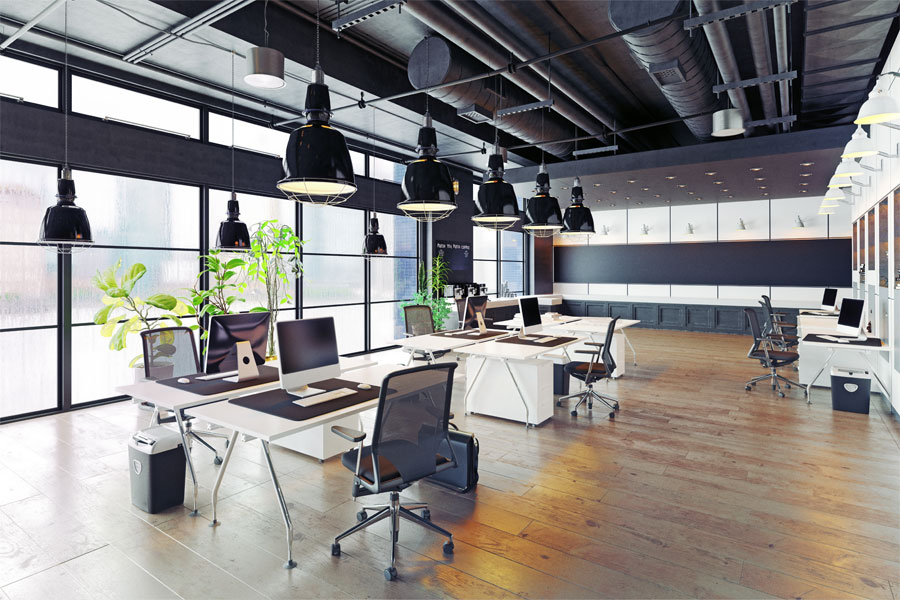
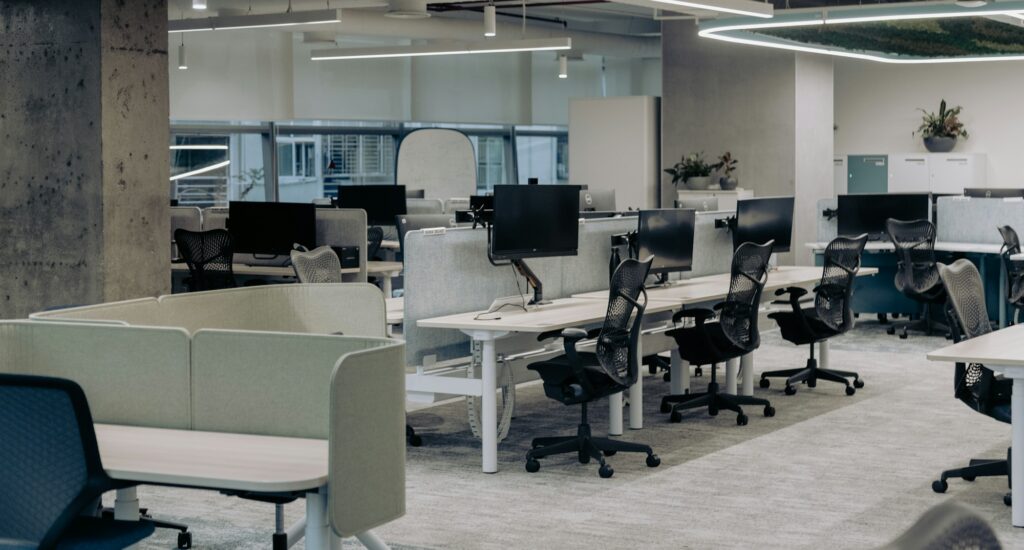
Three variables move this number more than the brand on the label: the worktop (18mm vs 25mm board, edge banding thickness, laminate vs veneer), the understructure (fixed leg vs beam-based system vs height-adjustable), and the wire management. A 1200mm linear seat on a simple leg frame is a different product from a beam-based system with a full raceway and a screen — and vendors will quote both against the same brief unless you stop them.
Height-adjustable desks are the most common late-stage budget shock. A single-motor sit-stand frame can add Rs. 15,000 to Rs. 30,000 per seat. If you want them, decide early and decide what percentage of seats get them; a 20% allocation in shared zones usually delivers most of the benefit at a fifth of the cost.
Task chairs
This is where cutting cost is most expensive in the long run. The functional difference between a Rs. 6,000 chair and a Rs. 18,000 chair is not the mesh — it is the synchro mechanism, the gas lift certification, the foam density, and whether the castors survive two years on carpet tile. Ask every vendor for the BIFMA or EN 1335 test certificate for the exact model quoted, not for the brand’s catalogue. Ask for the warranty terms in writing, split by mechanism, gas lift and upholstery.
Storage, soft seating and the long tail
Pedestals, lockers, credenzas, cafeteria seating, lounge chairs, reception furniture and meeting tables rarely appear in the headline comparison and routinely add 20% to 30% to the furniture package. Personal lockers in particular are under-counted in hybrid offices: if you are hot-desking, you need lockers at close to full headcount even though you are only building desks for 60% of it. That interacts directly with your space-per-employee assumptions, so settle the desk-sharing ratio before anyone counts furniture.
Lead times: the number that decides your handover date
Treat quoted lead times as starting after the purchase order and after final approval of samples and finishes — not from the day you first spoke to the vendor. Realistic planning assumptions in India:
- Domestic system furniture, standard finishes: 4 to 8 weeks from PO.
- Domestic, custom sizes or non-catalogue laminates: 8 to 12 weeks, and the laminate is usually the constraint.
- Imported seating or systems: 10 to 16 weeks door-to-door once customs clearance and inland transport are counted.
- Bespoke joinery and reception desks: 6 to 10 weeks, but with a site-measurement dependency that cannot start until the civil works are dimensionally frozen.
The practical implication: furniture PO release usually needs to happen in the first third of the build programme, not the last. On a 16-week fit-out, a vendor selected in week 10 with a 10-week lead time delivers into an empty, finished office in week 20. That is how a project that was never behind on site still hands over late — and why furniture belongs in the same conversation as your handover and snagging plan.
Writing a spec vendors can price like-for-like
Most furniture quote comparisons are meaningless because each vendor has quoted a slightly different product. Fix that by issuing a specification, not a wish list. For every item, state: dimensions, board thickness and core material, edge banding, finish reference, metal gauge and powder-coat spec, mechanism type, applicable test standard, warranty period, and whether installation, transport, unpacking and debris removal are in scope. Then require quotes in a fixed line-item format with per-unit rates and quantities visible.
That last point matters more than it sounds. A furniture quote that gives you a package price is impossible to negotiate and impossible to adjust when headcount moves. The same discipline you apply when reading a fit-out BOQ line by line applies here.
Five mistakes worth avoiding
- Approving finishes from a digital swatch. Always sign off physical samples under the actual lighting design of the new office — laminates and fabrics shift noticeably under 4000K versus 3000K.
- Ordering before the electrical layout is frozen. Beam-based systems carry the power; if the floor boxes move, the desk raceway design moves with them.
- Ignoring acoustics. Desk screens, upholstered panels and soft seating are among the cheapest sound absorption you can buy, and they are usually specified by someone who never saw the acoustic strategy.
- No mock-up. On any order above roughly 100 seats, insist on one fully built sample workstation and chair on site before bulk production is released.
- Forgetting the loading dock. Building service-lift dimensions, permitted working hours and material movement rules have delayed more furniture installations than manufacturing ever has.
Fit it into the wider budget early
Furniture is not a separate project. It is a dependency of your space plan, your electrical layout, your acoustic design and your programme, and its cost per seat should be set at the same time you set your overall cost per square foot. Teams that decide the furniture standard in week one and issue the PO in week four almost always land better pricing, better quality and an on-time handover than teams that run a competitive bid in the final month.
At AirBrick Infra, furniture specification sits inside our space planning and product supply and installation workstreams precisely so it never becomes a last-minute scramble. If you are planning a fit-out and want a realistic cost-per-seat and procurement programme for your headcount, get in touch with our team.