
Introduction
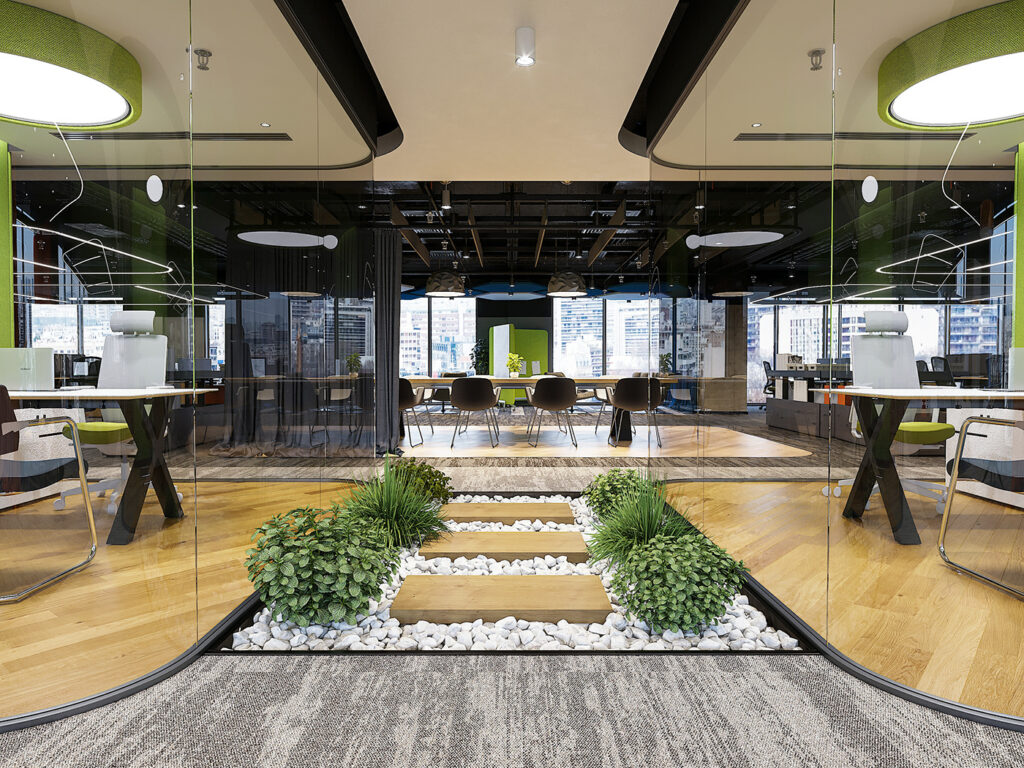
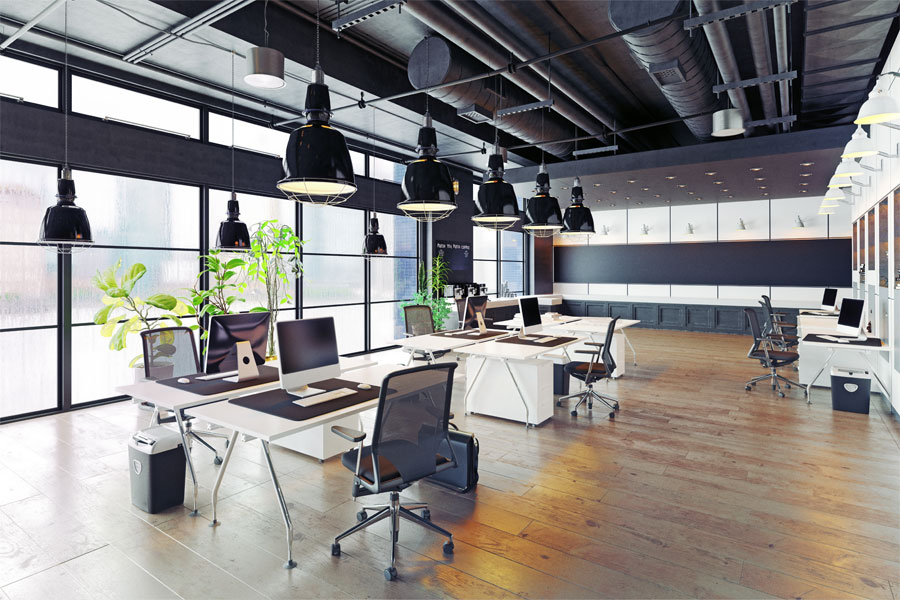
When people think about sustainable lighting, the conversation often begins and ends with LED bulbs. LEDs are a major step forward in reducing energy consumption, but in 2025, sustainable lighting in commercial interiors has evolved into something far more holistic. Today, smart businesses are designing lighting strategies that integrate natural daylight, intelligent automation, and human-centric illumination to create work environments that are energy-efficient, healthier for employees, and visually memorable. Lighting in modern office design is no longer just a functional requirement—it is a crucial driver of sustainability, employee well-being, and brand experience.
Why Lighting Matters in Commercial Interiors
In a typical commercial building, lighting can account for nearly one-third of total energy usage, making it one of the biggest opportunities for operational savings. Poor lighting environments contribute to eye strain, fatigue, migraines, mood decline, and reduced concentration, directly impacting productivity. Conversely, a well-designed lighting system supports circadian rhythms, improves cognitive performance, and enhances workplace comfort. Sustainable lighting has also become integral to corporate ESG goals, allowing organizations to reduce carbon footprints and qualify for global green building standards such as LEED and WELL. Additionally, lighting design plays a key aesthetic role by shaping how employees and visitors emotionally connect with a workspace.
Beyond LEDs: The Next Generation of Sustainable Lighting
The most future-ready offices are adopting advanced strategies that go far beyond replacing traditional fixtures. Daylight harvesting systems are becoming standard in innovative workplaces, using sensors to adjust artificial lighting based on sunlight available throughout the day. This reduces energy waste while improving visual comfort. Smart lighting controls powered by IoT technology allow motion-based automation and personalized lighting adjustment, enabling employees to modify brightness and color temperature according to their visual and sensory needs. Human-centric lighting has emerged as a breakthrough, using circadian-aligned illumination that mimics the natural progression of daylight to improve alertness in the morning and support relaxation into the evening, ultimately boosting focus, mood, and sleep quality.
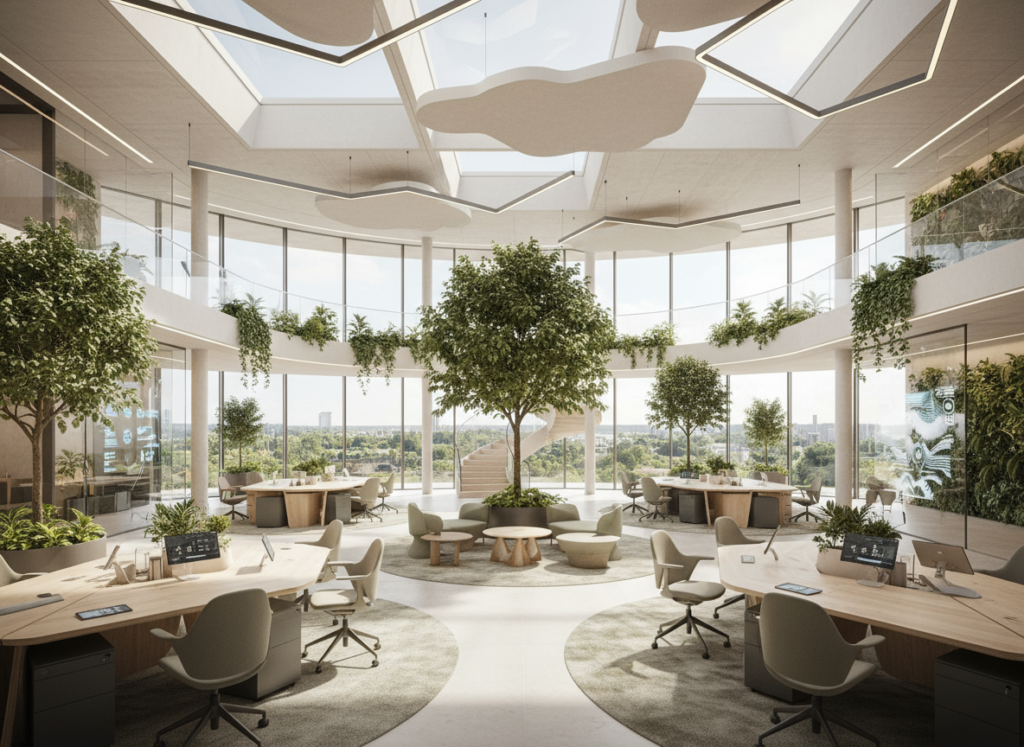
Biophilic lighting design is also transforming commercial interiors by introducing patterns of sunlight, shadow effects, and organic reflections that imitate natural environments. When integrated with green walls, open work zones, and earthy material palettes, these visual cues help reduce stress and strengthen employee connection to nature. Large corporate campuses and built-to-scale office developments are further exploring renewable-powered lighting systems such as solar-integrated fixtures combined with storage batteries that continue delivering clean power after sunset.
Case Example
A large corporate office in Mumbai recently implemented daylight harvesting paired with human-centric lighting in all its collaboration zones and meeting spaces. Within just six months, the company recorded a 25% reduction in electricity costs linked to lighting usage, along with noticeable improvements in employee well-being. Teams working extended evening shifts reported significantly lower fatigue levels and improved concentration, demonstrating how lighting directly influences performance and workplace health.
Benefits for Businesses
Adopting sustainable lighting in commercial interiors provides organizations with measurable advantages. Reduced energy consumption leads to lower operational expenses and faster ROI on smart lighting technology. Employees benefit from healthier visual environments that improve performance, job satisfaction, and comfort. Companies working toward sustainability certifications or ESG mandates find that smart lighting contributes meaningfully to compliance. Strategically designed lighting also enhances brand perception, signaling innovation, responsibility, and future-readiness to clients, investors, and talent.
Practical Tips for Companies
Businesses exploring sustainable lighting should begin with a professional audit of existing systems to identify inefficiencies. Integrating IoT-enabled controls, scheduling automation, and occupancy sensors ensures optimal energy performance. The most effective projects combine architectural daylight planning with adaptive artificial lighting to achieve a balanced, resilient, and human-centric illumination strategy. Collaborating with commercial interior experts who specialize in sustainable lighting design ensures that technology, aesthetics, and well-being work together seamlessly.
Conclusion
Sustainable lighting in commercial interiors is no longer just about energy-efficient bulbs—it represents a shift toward intelligent, human-supportive, environmentally responsible workplaces. As organizations continue to build healthier office cultures and stronger ESG frameworks, lighting becomes one of the most strategic design investments they can make. The future of work is illuminated by solutions that protect the planet, elevate employee well-being, and strengthen the identity of every workspace.
👉 At AirBrick Infra, we design next-generation work environments where lighting goes beyond functionality, creating commercial interiors that are sustainable, productive, and inspiring.
Frequently Asked Questions
Ques 1 : What is sustainable lighting in commercial interiors?
Ans 1 : It refers to lighting strategies that reduce energy usage, improve employee well-being, and integrate natural light, smart controls, and human-centric lighting design.
Ques 2 : How does sustainable office lighting improve productivity?
Ans 2 : It reduces eye strain, enhances focus, supports circadian rhythms, and increases visual comfort, leading to better cognitive performance.
Ques 3 : What is daylight harvesting and why is it effective?
Ans 3 : Daylight harvesting uses sensors to adjust artificial lighting based on available sunlight, helping reduce energy waste and maintaining visual balance.
Ques 4 : What role does smart lighting play in modern offices?
Ans 4 ; Smart systems use IoT and automation to adapt lighting to occupancy patterns, employee preferences, and time of day, improving efficiency and comfort.
Ques 5 : Can sustainable lighting help achieve ESG or green building certifications?
Ans 5 : Yes, sustainable lighting supports LEED, WELL, and ESG compliance by lowering carbon footprint and improving the health and safety of indoor environments.
Summary
Sustainable lighting in commercial interiors has evolved beyond LED replacement and now focuses on intelligent, human-centered, and environmentally responsible illumination strategies. In 2025, forward-looking companies are adopting solutions such as daylight harvesting, IoT-enabled lighting controls, circadian human-centric lighting, and biophilic design to reduce energy consumption while improving employee well-being and workspace aesthetics. Lighting is a major contributor to workplace performance, influencing everything from focus and cognitive productivity to mood and stress levels. Smart technology allows offices to eliminate energy waste through automation and personalized control, while renewable-powered systems support long-term sustainability goals. A Mumbai-based corporate office saw a 25% reduction in energy costs and improved employee comfort after implementing daylight-integrated and HCL lighting systems, demonstrating the measurable benefits of sustainable illumination. By investing in next-generation lighting design, companies can lower operational costs, enhance brand experience, support ESG commitments, and create healthier, future-ready workplaces where employees thrive. Sustainable lighting is now a core pillar of modern commercial interior design, not just an efficiency upgrade.