
Introduction
In the fast-paced world of business, offices often turn into chaotic environments—crowded desks, visual noise, excessive branding, and constant distractions. But in 2026, a major shift is underway. Companies across India and globally are embracing minimalism in office design, not as an aesthetic trend, but as a strategic approach to create clarity, focus, and efficiency in the workplace.
Minimalism isn’t about creating cold, empty spaces. It’s about achieving more with less—removing what’s unnecessary, keeping what’s essential, and designing environments that feel spacious, calm, and deeply human. It’s a design philosophy that supports the modern workforce’s need for mental clarity, agility, and comfort.
Why Minimalism Works for Modern Offices
Minimalist office design has gained momentum because it solves real workplace challenges. In cluttered environments, the mind naturally feels scattered. Clean, open layouts help reduce stress, sharpen focus, and create an atmosphere where people can think better and work smarter.
Minimalism is also incredibly cost-efficient. Companies spend less on excessive décor, bulky furniture, and visual elements that quickly become outdated. Instead, they invest in fewer, higher-quality pieces that last longer and look relevant across changing design trends.
Most importantly, minimalist workplaces tend to feel timeless. The simplicity, symmetry, and neutral tones create a sense of calm and professionalism that appeals to employees, clients, and stakeholders—making the design future-proof.
Principles That Shape Minimalist Office Spaces
Minimalism is built on intentionality. It’s not about removing things—it’s about prioritizing what matters. A minimalist office blends functionality with beauty by focusing on space, light, comfort, and purpose.
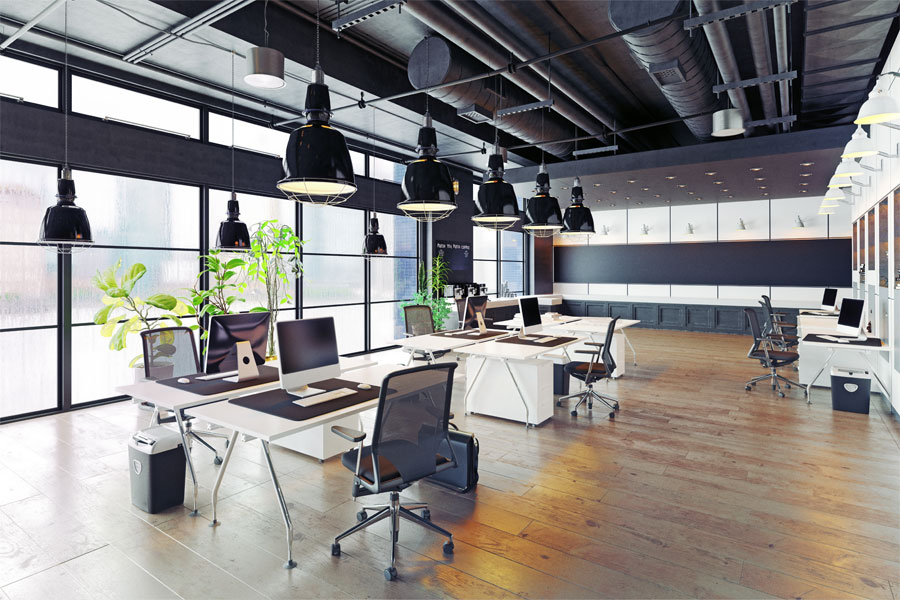
One of the key starting points is decluttering. Offices move away from overdecorated desks and walls, opting for hidden storage and clean horizontal surfaces. Neutral palettes—whites, greys, beiges—create a calm visual baseline, while subtle brand-coloured accents add character without overwhelming the atmosphere.
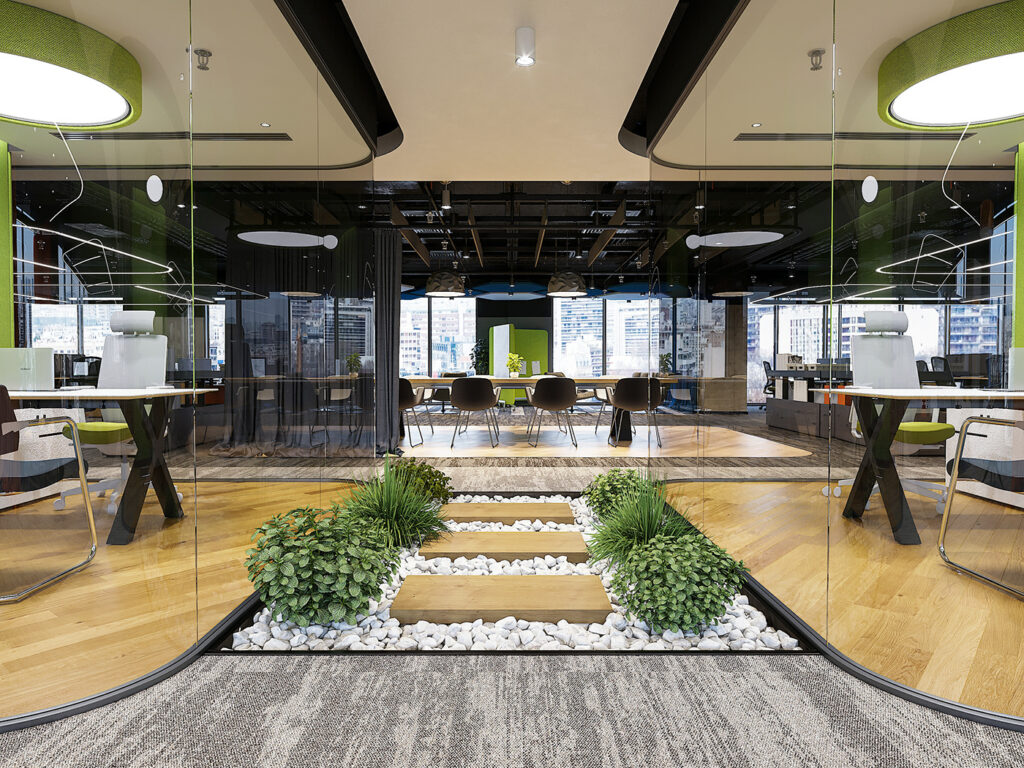
Furniture also takes center stage. Multi-functional desks with built-in storage, modular seating, and ergonomic solutions allow teams to grow and adapt without redoing the entire space. Natural light is treated as a design element, enhanced through glass partitions and thoughtful layouts to make the office feel brighter and more open.
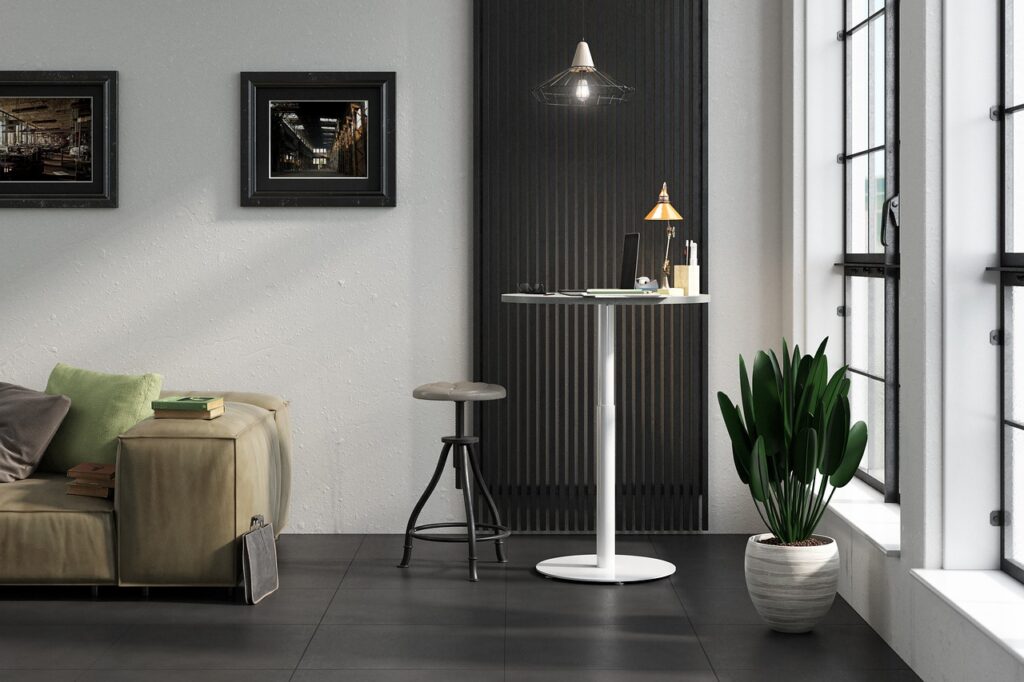
Quality always outweighs quantity. A few meaningful design choices—like a single artwork, a curated plant display, or a well-designed accent wall—create effect without cluttering the space.
Minimalism in Indian Commercial Interiors
In India, office spaces often deal with challenges like smaller footprints, limited budgets, and fast-changing teams. Minimalism naturally fits these needs.
To make it clearer, here’s how minimalism benefits Indian workspaces:
- Open layouts maximize limited space
- Modular designs help with fast team scaling
- Neutral, clean aesthetics appeal to startups & corporates alike
- Lower clutter = lower cost & maintenance
A Noida-based startup recently embraced this style with the help of AirBrick Infra, using white walls, glass partitions, modular desks, and a single brand-coloured accent wall. The office instantly felt larger, more organized, and more premium—yet the redesign stayed well within budget.
Beyond Looks: The Real Impact of Minimalism
Minimalist interiors offer benefits far beyond aesthetics. Lower maintenance, cleaner air flow, and simplified layouts lead to smoother operations. Teams also feel more relaxed and motivated when their environment isn’t drowning in visual noise. And because minimalism reduces waste and overconsumption, it aligns perfectly with sustainable design principles.
Ultimately, minimalism creates a workplace that helps people think clearly, collaborate easily, and stay connected to the environment around them.
Conclusion
Minimalism in office design isn’t about stripping away personality—it’s about highlighting what truly matters. A well-planned minimalist workspace boosts productivity, reduces distractions, saves costs, and reflects a clean, modern brand identity.
At AirBrick Infra, we design minimalist commercial interiors that merge simplicity with high functionality—helping businesses create efficient, elegant, and future-ready workplaces.
FAQs (Frequently Asked Questions)
- What is minimalist office design?
Ans: Minimalist office design focuses on simple layouts, clean lines, modular furniture, and clutter-free environments that enhance clarity, comfort, and productivity. - Why is minimalism gaining popularity in workplaces in 2025?
Ans: Companies in 2025 are prioritizing mental clarity, efficiency, and cost savings. Minimalism helps reduce visual distractions, improve focus, and create timeless, future-ready workspaces. - How does a minimalist office improve productivity?
Ans: Clutter-free layouts reduce stress, promote better organization, improve movement within the office, and create a calmer environment—helping employees stay focused for longer. - Is minimalist design suitable for Indian offices with limited space?
Ans: Absolutely. Minimalism works perfectly for Indian workspaces because it maximizes small areas, reduces unnecessary décor, and allows flexibility through modular furniture. - What are the key elements of minimalist commercial interiors?
Ans: Essential elements include neutral colour palettes, clean lines, hidden storage, ergonomic furniture, open layouts, natural light, and one or two impactful décor accents.
Summary
Minimalist office design is becoming a leading workplace trend in 2025 as businesses shift toward cleaner, calmer, and more efficient environments. By removing clutter and focusing on essential elements, minimalism creates workspaces that feel open, organized, and mentally refreshing. Neutral colours, natural light, modular furniture, and hidden storage help employees stay focused and reduce daily stress.
For Indian offices—where space, budget, and scalability matter—minimalism offers practical solutions. Open layouts make small spaces look larger, while durable, multi-functional furniture keeps operations flexible. Beyond aesthetics, minimalist design reduces maintenance costs, supports sustainable practices, and enhances overall workplace productivity.
By highlighting clarity, comfort, and functionality, minimalist offices help teams work better and businesses project a modern, professional identity.