Introduction
Workspaces today are evolving far beyond desks, cabins, and meeting rooms. With rising energy costs, climate concerns, and shifting employee expectations, sustainable office design has become a strategic priority for businesses in 2025. Companies are realizing that eco-friendly interiors aren’t just “good to have”—they directly impact operational costs, talent retention, workplace well-being, and long-term brand value.
Sustainability is no longer about installing a few plants or LED bulbs. It’s about creating human-centric, energy-efficient, low-impact workplaces that support both people and the planet. This blog explores why green office design is emerging as a core business advantage for forward-thinking organizations.
Cost Savings Through Energy Efficiency
Sustainable office design goes beyond aesthetics—it delivers measurable financial benefits. Companies adopting energy-efficient systems are reducing their monthly utility bills while improving workspace comfort.
A sustainability-driven workspace typically includes:
- LED lighting systems that reduce electricity usage by up to 75%
- Smart sensors that adjust lighting, HVAC and air quality based on occupancy
- Energy-efficient glass, insulation, and reflective materials to lower cooling loads in warm Indian climates
- Solar panels that significantly offset electricity dependency
Over time, these upgrades recover their cost and create a long-term reduction in operational expenses, making sustainability a financially sound investment.
Better Talent Attraction & Higher Employee Retention
Employees today, especially Millennials and Gen Z, actively prefer companies that prioritize the environment and their well-being. A sustainable, IGBC- or LEED-aligned workspace signals that the organization values responsibility, innovation, and people-first practices.
Professionals working in green-certified offices report:
- Lower workplace stress
- Higher levels of job satisfaction
- A stronger sense of purpose and belonging
A thoughtfully built sustainable office becomes a powerful talent magnet, helping organizations retain top performers and strengthen workplace culture.
Boosting Employee Well-being and Daily Productivity
A core principle of sustainable design is enhancing indoor environmental quality. This includes:
- Natural lighting to regulate circadian rhythm
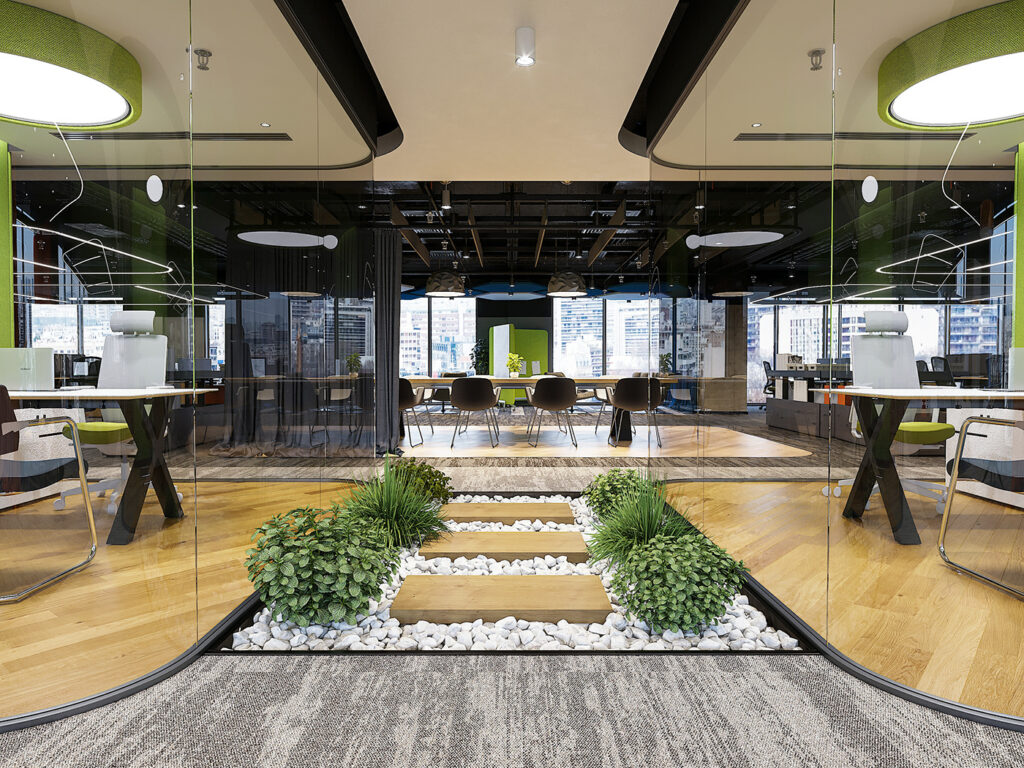
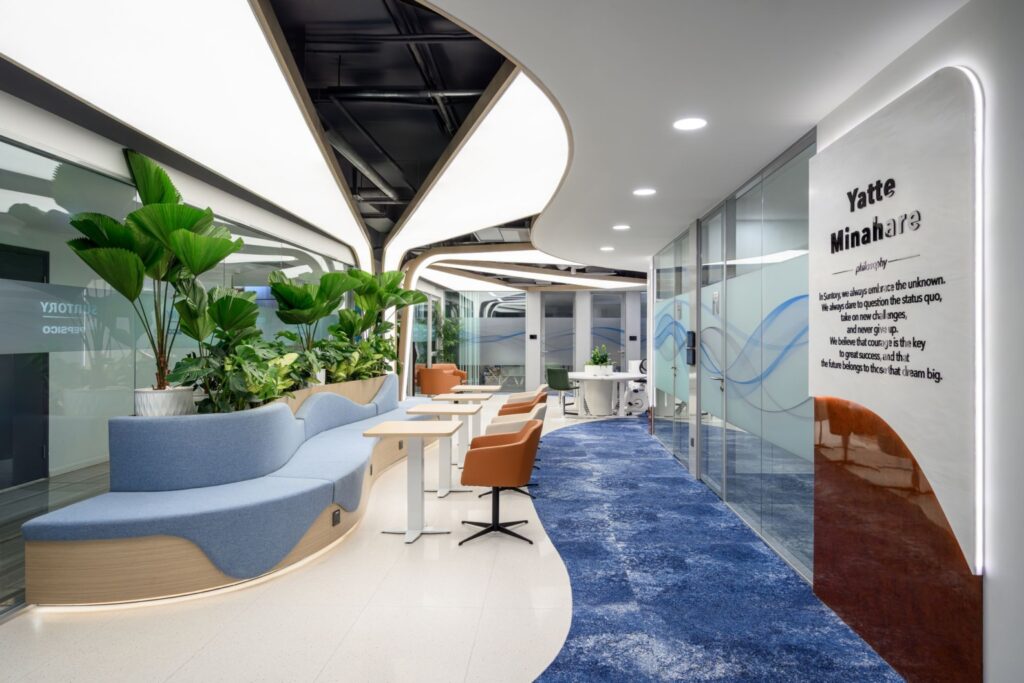
- Biophilic elements (plants, nature-inspired textures, greenery)
- High-quality ventilation and purified airflow
- Research consistently shows that employees working in naturally lit, well-ventilated offices experience 18% higher productivity and significantly fewer sick days. Biophilic features reduce carbon dioxide levels and improve emotional well-being.
Simply put, sustainability directly impacts focus, creativity, energy levels, and mental clarity—making it an essential choice for high-performing teams.
Strengthening Brand Image and Market Value
In 2025, sustainability is a major differentiator. Stakeholders—including clients, investors, and partners—gravitate toward environmentally responsible companies.
Key benefits include:
- Higher resale and rental value for green-certified buildings
- Stronger brand credibility and industry leadership
- Increased market trust and customer loyalty
Companies adopting sustainable office design position themselves as future-ready leaders who care about impact, innovation, and long-term value creation.
5. Future-Proofing Against Regulations
Governments worldwide are tightening environmental regulations. In India too, certifications like IGBC (Indian Green Building Council) and LEED (Leadership in Energy and Environmental Design) are becoming more critical.
Companies that adopt sustainable practices early are not only ahead of compliance but also enjoy incentives and tax benefits in some regions. This proactive approach saves organizations from last-minute costly adjustments.
Conclusion
In 2026, sustainable office design is not an optional trend—it is the backbone of future-ready workplaces. By integrating eco-friendly materials, smart energy systems, and employee-focused design strategies, companies can reduce costs, boost productivity, retain talent, and enhance brand value.
At AirBrick Infra, we help organizations create sustainable, efficient, and human-centric workspaces built for long-term performance and modern business needs.
If you’re planning your next workspace, this is the moment to invest in sustainability—and secure a future that benefits both your people and your business.
Frequently Asked Questions(FAQs)
- What exactly is sustainable office design, and how is it different from traditional office interiors?
Ans: Sustainable office design focuses on creating workspaces that minimize environmental impact while maximizing energy efficiency, occupant well-being, and long-term cost savings. Unlike traditional interiors—which often rely on high energy consumption, synthetic materials, and short-term planning—sustainable offices use eco-friendly materials, natural lighting, efficient HVAC systems, and biophilic design to reduce waste and improve overall health. The goal is not just aesthetics but a long-term, responsible approach that benefits both the business and the environment. - Is sustainable office design expensive to implement?
Ans: Initially, certain sustainable elements such as energy-efficient glass, smart lighting, or green-certified materials may require a slightly higher upfront investment. However, the long-term ROI is significantly higher. Companies save on electricity bills, maintenance costs, HVAC loads, and employee health-related expenses. Over time, sustainable offices pay for themselves through reduced operational costs and higher productivity. Many businesses also qualify for tax benefits, rebates, and green certifications that add financial value. - How does sustainable office design impact employee productivity and well-being?
Ans: Sustainable interiors directly enhance daily employee experience. Features like natural lighting, improved ventilation, ergonomic planning, and indoor greenery reduce stress and mental fatigue. Studies show that employees in sustainable offices are more focused, take fewer sick days, and feel more connected to their workspace. Fresh air circulation, low-VOC materials, and biophilic elements support cognitive function, mood stability, and creativity—creating a healthier, more productive workforce. - What certifications should businesses consider when designing a sustainable office?
Ans: In India and globally, the most recognized certifications include:
- IGBC (Indian Green Building Council) – focuses on resource efficiency and eco-friendly design.
- LEED (Leadership in Energy and Environmental Design) – an internationally recognized green building rating system.
- GRIHA (Green Rating for Integrated Habitat Assessment) – India’s national green building rating.
- These certifications validate a company’s sustainability efforts and enhance brand credibility. They also help standardize energy efficiency, water management, material selection, and indoor environmental quality.
- Can sustainable office design work in small or budget-conscious workplaces?
Ans: Absolutely. Sustainable design doesn’t require large spaces or oversized budgets. Even small offices can implement cost-effective strategies like optimizing natural light, using energy-efficient LEDs, incorporating indoor plants, choosing recycled materials, and installing low-flow fixtures. Modular furniture, open layouts, and smart storage also support sustainability. These changes improve space efficiency, save costs, and create healthier environments—making sustainable design suitable for startups, SMEs, and growing businesses.